Wednesday, December 5, 2012

Jeff Hawkins Develops a Brainy Big Data Company - NYTimes.com

Jeff Hawkins Develops a Brainy Big Data Company - NYTimes.com:

Mr. Hawkins, who helped develop the technology in Palm, an early and successful mobile device, is a co-founder of Numenta, a predictive software company. Numenta’s technology is based on Mr. Hawkins’s theories of how the brain works, a subject he has studied and published on intensively. Perhaps most important for the technology industry, the product works off streams of real-time information from sensors, not the trillions of bytes of data that companies are amassing.
Numenta’s product, called Grok, is a cloud-based service that works much the same way. Grok takes steady feeds of data from things like thermostats, Web clicks, or machinery. From initially observing the data flow, it begins making guesses about what will happen next. The more data, the more accurate the predictions become.
It has been much more difficult to engineer than that sounds. Modeling itself on 40 sensory receptors feeding over 128 information-seeing dendrites on each cell of the brain, Mr. Hawkins put into Grok a mathematical algorithm that he says approximates the way brain cells work together, even sometimes canceling out each other’s signals to refine a sense of what’s going on.
“This is the future of machine intelligence,” he said. “Twenty years from now the computer industry will be driven by this, I’m certain of it.”

Saturday, September 29, 2012

Clocking The Speed Of Thought


Around 300 milliseconds. That's how long it took a volunteer to begin to understand a pictured object. Add to that another 250 to 450 milliseconds to fully comprehend what it was. Total speed of thought: between 550 and 750 milliseconds."


Such are the results coming out of work conducted by John Hopkins scientists seeking to measure rates of comprehension. "This information has been difficult to acquire," says neurologist and team leader John Hart, "even with different combinations of behavioural tests, electrical recordings and imaging studies such as PET scans."

Yet by taking advantage of a unique opportunity afforded by a patient scheduled for tests using electrodes surgically placed on his brain, the researchers have moved one step closer to "building theories of higher mental activity." Until now, the speed of cognitive operations (including language processing) has been the missing ingredient.

Reporting their findings in the May 25 Proceedings of the National Academy of the Sciences, the researchers describe how the patient was asked to name and categorize a variety of pictures and words. By way of a grid of 174 electrodes, his brain activity was then monitored. The speed of comprehension was far quicker for objects that were already familiar to him.

"The data, obtained within a single stage at a single site in the brain, are further evidence that information accumulates gradually in the brain, rather than in a strictly all-or-none fashion," says Hart.
He adds that understanding this process of accumulation could help scientists understand comprehension and word loss from disorders such as stroke or Alzheimer's disease.


'via Blog this'

Wednesday, September 19, 2012

Guest post: a teser on Mars « Why Evolution Is True

Guest post: a teser on Mars « Why Evolution Is True:


According to NASA:
“This is one of the most extraordinary pictures from the whole mission,” said Opportunity’s principal investigator, Steve Squyres of Cornell University in Ithaca, N.Y. “Kirkwood is chock full of a dense accumulation of these small spherical objects. Of course, we immediately thought of the blueberries, but this is something different. We never have seen such a dense accumulation of spherules in a rock outcrop on Mars.”
Read more 

'via Blog this'

Tuesday, August 7, 2012

Landing of Curiosity: Relive the video if you have missed!

Go ahead and watch the video of rover curiosity landing on Mars posted by NASA Jet Propulsion Lab at Caltech. It is an amazing moment and should not miss such an event marking stepping of mankind on Mars!


Monday, August 6, 2012

From Star Wars to science fact: Tatooine-like planet discovered


Although cold and gaseous rather than a desert world, the newfound planet Kepler-16b is still the closest astronomers have come to discovering Luke Skywalker's home world of Tatooine. Like Tatooine, Kepler-16b enjoys a double sunset as it circles a pair of stars approximately 200 light-years from Earth. It's not thought to harbor life, but its discovery demonstrates the diversity of planets in our galaxy.

Mars Curiosity Opens Eyes and Sees This: Big Pics : Discovery News


In my last post in smile I had the news of the launch of curiosity. Now the time has come at last when curiosity is on its homeland!

Here is from Discovery News:

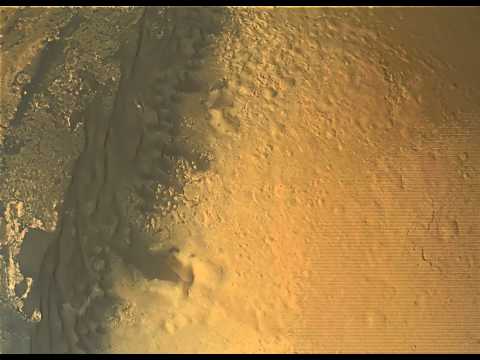
 "Aug 6, 2012 -- Curiosity found its new home on Mars early Monday, settling down beside a giant mound of layered rock inside an ancient crater at 1:32 a.m. EDT. The rover opened its eyes and took these photos of its surroundings, the first-ever images of this part of the planet.

Curiosity will prowl the crater for two years, as well as an unusual, three-mile-high mound of what appears to be sediments rising from the crater’s floor. The purpose of the $2.5 billion, two-year mission is to look for habitats where life could have taken root."

Monday, April 16, 2012

Dream ATM: Scan hand for money, no hand required!


Here is the news from DiscoveryNews:

In a move that seems like it should have happened in the year 2000, a Japanese bank announced it will be installing about a dozen automated teller machines that can read customers' palms to identify them. Ogaki Kyoritsu Bank will be the country's first to introduce the system.

Following the massive earthquake and tsunami more than a year ago in Japan, scanning started to be seen in a new light. Instead of being extra security, it could mean standard security for customers who need cash in an emergency but don't have their bank cards on them.

The AFP reports   that Ziraat Bank in Turkey was the first to use the palm-scanning bank machines that don't need a card. In Japan, Ogaki Kyoritsu plans to install the new ATMs at 10 branches, two mobile banks, and a drive-through location this September.

Analysis by Alyssa Danigelis for Discovery News analyses this dream ATM this way:
Then again, there's something potentially freeing about not needing a plastic card. Look, guys, I just place my hand here and cash comes out! Still, I do feel kind of bad for parents who will have to explain how this works to little kids: "No, sweetie. I can't always just make money appear."

Tuesday, August 16, 2011

The Father of Trial Randomization Dies | The Scientist

The Father of Trial Randomization Dies | The Scientist

Searching for spin liquids: Much-sought exotic quantum state of matter can exist

Diagram depicting anti-ferromagnetic order (upper) compared to a spin liquid phase (lower). In an anti-ferromagnet, the spins are anti-aligned. A spin liquid has no order and the spins can be viewed as bobbing about like water molecules in liquid water. (Credit: E. Edwards)
The simulation of the quantum spin-liquid was performed on a flat honeycomb structure, where the electrons show a dynamical phase lacking any order. (Credit: Image courtesy of University of Stuttgart)

As the sizes of electronic components shrink, soon down to the size of single atoms or molecules, quantum interactions become ever more important. Consequently, enhanced knowledge and exploitation of quantum effects is essential. Researchers at the Joint Quantum Institute (JQI) in College Park, Maryland, operated by the University of Maryland and the National Institute of Standards and Technology (NIST), and at Georgetown University have uncovered evidence for a long-sought-after quantum state of matter, a spin liquid (more on quantum spin-liquid see this article).
The research was performed by JQI postdoctoral scientists Christopher Varney and Kai Sun, JQI Fellow Victor Galitski, and Marcos Rigol of Georgetown University. The results appear in an editor-recommended article in the 12 August issue of the journalPhysical Review Letters.

You can't pour a spin liquid into a glass. It's not a material at all, at least not a material you can touch. It is more like a kind of magnetic disorder within an ordered array of atoms. Nevertheless, it has many physicists excited.
To understand this exotic state of matter, first consider the concept of spin, which is at the heart of all magnetic phenomena. For instance, a refrigerator magnet, at the microscopic level, consists of trillions of trillions of iron atoms all lined up. Each of these atoms can be thought of loosely as a tiny spinning ball. The orientation of that spin is what makes the atom into a tiny magnet. The refrigerator magnet is an example of a ferromagnet, the ferro part coming from the Latin word for iron. In a ferromagnet, all the atomic spins are lined up in the same way, producing a large cooperative magnetic effect.
Important though they may be, ferromagnets aren't the only kind of material where magnetic interactions between spins are critical. In anti-ferromagnets, for instance, the neighboring spins are driven to be anti-aligned. That is, the orientations of the spins alternate up and down (see top picture in figure). The accumulative magnetic effect of all these up and down spins is that the material has no net magnetism. The high-temperature superconducting materials discovered in the 1980s are an important example of an anti-ferromagnetic structure.
More complicated and potentially interesting magnetic arrangements are possible, which may lead to a quantum spin liquid. Imagine an equilateral triangle, with an atom (spin) at each corner. Anti-ferromagnetism in such a geometry would meet with difficulties. Suppose that one spin points up while a second spin points down. So far, so good. But what spin orientation can the third atom take? It can't simultaneously anti-align with both of the other atoms in the triangle. Physicists employ the word "frustration" to describe this baffling condition where all demands cannot be satisfied. Read more to learn how physicist address this 'frustration' in this review from which this post is created.


Thursday, August 11, 2011

Mind-Blowing Solar Views from the SDO: Photos

In the early hours of Tuesday morning, our nearest star put on a show that won't be forgotten for a long, long time. Under the ever-watchful eyes of an armada of solar observatories, the sun unleashed an M2-class solar flare
Coronal rain
This spectacular high definition image of the sun was captured by NASA's Solar Dynamics Observatory (SDO) just as sunspot 1087 was rotating out of view. Although it will soon disappear behind the sun, this sunspot region isn't going quietly
On April 2, NASA's Solar Dynamics Observatory (SDO) captured this rare view of the sun. Only twice a year, SDO enters an "eclipse season" when the Earth blocks its otherwise uninterrupted view of our nearest star. For up to 72 minutes a day, an ominous shadow can be seen to obscure the otherwise high-definition view of the solar surface

A powerful X-class flare rocked the solar surface, creating a dazzling show for the orbiting NASA Solar Dynamics Observatory (SDO). As can be seen by the high-definition SDO photograph above, the flare erupted near the solar limb, directed (mostly) away from Earth

Highest resolution photograph of the sun available to date, part of a brand new series of NASA Solar Dynamics Observatory (SDO) observations.


Monday, August 1, 2011

Wiedemann-Franz Law: Physicists break 150-year-old empirical laws of physics

Apparatus from the original 1853 paper in which the Wiedemann-Franz Law was first established. (Credit: Image courtesy of University of Bristol)

A violation of one of the oldest empirical laws of physics has been observed by scientists at the University of Bristol. Their experiments on purple bronze, a metal with unique one-dimensional electronic properties, indicate that it breaks the Wiedemann-Franz Law. 

In 1996, American physicists C. L. Kane and Matthew Fisher made a theoretical prediction that if you confine electrons to individual atomic chains, the Wiedemann-Franz law could be strongly violated. In this one-dimensional world, the electrons split into two distinct components or excitations, one carrying spin but not charge (the spinon), the other carrying charge but not spin (the holon). When the holon encounters an impurity in the chain of atoms it has no choice but for its motion to be reflected. The spinon, on the other hand, has the ability to tunnel through the impurity and then continue along the chain. This means that heat is conducted easily along the chain but charge is not. This gives rise to a violation of the Wiedemann-Franz law that grows with decreasing temperature.
The experimental group, led by Professor Nigel Hussey of the Correlated Electron Systems Group at the University of Bristol, tested this prediction on a purple bronze material comprising atomic chains along which the electrons prefer to travel.

Not only does this remarkable capability of this compound to conduct heat have potential from a technological perspective, such unprecedented violation of the Wiedemann-Franz law provides striking evidence for this unusual separation of the spin and charge of an electron in the one-dimensional world.

Professor Hussey said: "One can create purely one-dimensional atomic chains on substrates, or free-standing two-dimensional sheets, like graphene, but in a three-dimensional complex solid, there will always be some residual coupling between individual chains of atoms within the complex that allow the electrons to move in three-dimensional space.

Graphene is a two-dimensional crystal consisting of a single layer of carbon atoms arranged hexagonally. (Credit: Berkeley Lab/U.S. Department of Energy)
The Nobel prize winning scientists Professor Andre Geim and Professor Kostya Novoselov who discovered world's thinnest material graphene are now at the process of using it to produce fastest electronics. Graphene is a novel two-dimensional material which can be seen as a monolayer of carbon atoms arranged in a hexagonal lattice. It possesses a number of unique properties, such as extremely high electron and thermal conductivities due to very high velocities of electrons and high quality of the crystals, as well as mechanical strength.

Well, the opportunities for a faster electronics with devices like touch-screens, ultra-fast transistors and photodetectors are accelerated with such discoveries like graphenes and one-dimensional material like purple bronze! 

Sunday, July 31, 2011

Remind Me Again, Why Isn't Pluto a Planet? : Discovery News


Artist impression of Pluto and largest moon Charon from the surface of either Nix or Hydra, two smaller moons. "P4" is the new addition.

Last week, news broke that a team of astronomers using the Hubble Space Telescope had discovered a new moon in orbit around Pluto.
They were actually looking for signs of a ring system when they stumbled across another tiny object -- now imaginatively called "P4" -- bringing Pluto's moon count to four. 
After addition of a new moon, will Pluto be called a planet again? NO... Why? click on the link and Read More in this article.

Thursday, July 21, 2011

Fundamental constants 'change': Gravity weaker, electromagnetic force stronger, according to latest recommended values


The constants, which range from relatively famous (the speed of light) to the fairly obscure (Wien frequency displacement law constant) are adjusted every four years in response to the latest scientific measurements and advances. These latest values arrive on the verge of a worldwide vote this fall on a plan to redefine the most basic units in the International System of Units (SI), such as the kilogram and ampere, exclusively in terms of the fundamental constants.
The values are determined by the Committee on Data for Science and Technology (CODATA) Task Group on Fundamental Constants, an international group that includes NIST members. The adjusted values reflect some significant scientific developments over the last four years.


Wednesday, July 20, 2011

Parallel Universes: Are we really alone in this 'Universe'?


The debate on weather the Multiverse really exist or not is a hot topic since many years. The proponents of parallel universes strike back with multiverse. Read the links for a fascinating overview of these reveling concepts which challenge our perceptions.

Finally a man (Theoretical Physicist) who is a rebel in his own field always challenging his fellow men about current concepts or theories. He even disputed Stephen Hawking about black holes and eventually made him concede with his black hole physics. He is the man behind the development of parallel universe concept again challenging with the concept of a Level 1 multiverse.


We may never be able to grasp that reality. The universe and its ingredients may be impossible to describe unambiguously - Leonard Susskind

Tuesday, July 19, 2011

Neural signature of 'mental time travel': Memories formed in the same context become linked, evidence shows

Almost everyone has experienced one memory triggering another, but explanations for that phenomenon have proved elusive. Now, University of Pennsylvania researchers have provided the first neurobiological evidence that memories formed in the same context become linked, the foundation of the theory of episodic memory. Read More

NASA's Dawn spacecraft returns close-up image of giant asteroid Vesta

NASA's Dawn spacecraft returns close-up image of giant asteroid Vesta

Nanotechnology: injections or sampling? New 'molecular syringes' under testing


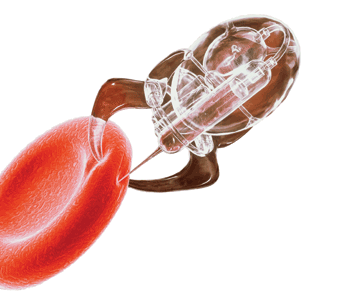
Which is better, a quick vertical jab on the buttock or the delicately soft entry of a blood sample? Waiting to find out "for what," some are already wondering "how" to use those tiny "molecular syringes" which are carbon nanotubes. With a diameter of less than one millionth of a millimetre (nanometre) and a maximum length of just a few millimetres, the first use that springs to mind when we think of this ethereal tubes -- the smallest ever made by man -- is as potential needles for injecting drugs or genes into sick cells. And if a syringe it is, we had better start thinking about how to use them. Read More

The above picture is an illustration of how a nanorobot or a nanobot injects drug into a red blood cell and Phil Ball, a science writer warns in his column how pictures which are a combination of photographic reality and graphic inventions can persuade us into believing such things!  

NASA's Dawn spacecraft enters orbit around asteroid Vesta

NASA's Dawn spacecraft enters orbit around asteroid Vesta